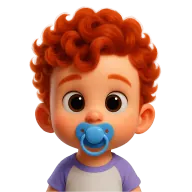
Why does a baby’s hair color change?
3w Creation
A baby can be born with dark hair and look fairer a few months later. Some of the hair present at birth can fall out, and the hair that replaces it may be a different shade. Color can keep changing as the amount and mix of pigment in new growth change with age.
New hair can come in a different shade
Each strand grows from a small structure in the scalp called a hair follicle. During the first six months, many babies shed some of the hair they were born with. The hair that grows in its place can differ in color and texture.
Think of a baby with dark brown hair in their first family photos. A few months later, fine, lighter brown hairs may show up among the darker strands. As more of the new hair grows in, the overall shade can look lighter. (American Academy of Pediatrics)
New hair gets its color as it grows
Melanin colors hair as it forms in the follicle. Eumelanin contributes to brown and black tones, and pheomelanin contributes to reddish tones. Blond hair generally contains little eumelanin. The amount and mix of these pigments give hair its range of shades.
Many genes inherited from the parents influence hair pigmentation. As a child grows, new hair can receive a different amount or mix of pigments. For example, if the new strands contain more dark pigment, the hair can look darker as they grow out. (MedlinePlus Genetics)
At what age does a baby’s hair color settle?
There is no single age at which hair color settles. It can keep changing well after the first few months of life, and how much and when it changes varies from child to child.
In a study published in 2000, researchers followed 232 children from one district of Prague from one month to five years of age. Darker shades were more common in the first six months. Lighter shades became more common between nine months and two and a half years. From ages three to five, the group showed a trend toward darker hair.
Another study followed twins from three months to six years and also recorded changes in hair color. Identical twins often had matching colors at each age studied, which points to a genetic influence. The two studies describe patterns in the groups they followed. (Prokopec, Glosová & Ubelaker (2000), Matheny & Dolan (1975))
Birth and the first months
Hair that grows in after some of the first strands fall out may be a different shade.
Childhood
The color can continue to change. Hair that was light can gradually darken.
Adolescence
Hair that was blond in childhood may have darkened by the teenage years.
These are examples of possible changes. Hair can also stay a similar shade for years.
What can the hair color calculator tell you?
With Predict Hair, you can choose the parents’ hair colors and add any grandparents’ colors you know. Try changing one choice to see how the distribution shifts. The percentages describe outcomes within the game’s simplified rules.
You can observe a baby’s first shade at birth and see how it develops as the child grows.
Open the baby hair color calculator
More guides on hair color
When does a baby’s eye color stop changing?
Sources
- American Academy of Pediatrics. How Your Newborn Looks
- MedlinePlus Genetics. Is hair color determined by genetics?
- Prokopec, Glosová & Ubelaker (2000). Change in Hair Pigmentation in Children From Birth to 5 Years in a Central European Population (Longitudinal Study)
- Matheny & Dolan (1975). Sex and genetic differences in hair color changes during early childhood